
As summer begins to wind down, you may notice that your skin does not look or feel quite the same as it did a few months ago. Perhaps it feels drier despite the warmer weather, your tone looks less even, areas of pigmentation have become more noticeable, or products that worked well earlier in the season no longer seem to give your skin what it needs.
These changes do not necessarily mean that your skincare routine has stopped working. Throughout the summer, your skin has been responding to a different combination of factors, including sun exposure, heat, humidity, travel, time outdoors, and changes in your daily routine. As those conditions begin to shift, this can be a useful time to look at how your skin is behaving now rather than continuing automatically with the same approach.
At PIPS, seasonal skincare is not about replacing your entire routine every few months. It is about understanding what you are noticing in your skin and deciding whether small adjustments to home care, professional treatments, or both could better support it as you move into the next season.
Your skin does not experience summer in just one way
It is easy to think of summer skincare primarily in terms of sun exposure, but your skin responds to much more than UV exposure alone.
Heat and humidity can influence oil production and how products feel on the skin. More time outdoors can mean greater exposure to environmental factors, while swimming, travel, air conditioning, and changes in your usual schedule can all affect hydration and consistency with your normal routine.
By the end of the season, these influences may show up differently depending on your skin. You might notice that it feels more dehydrated or reactive, that texture appears less smooth, or that pigmentation that was previously subtle has become easier to see.
This is why the transition into fall can be a useful moment for reassessment. Instead of assuming that your skin needs a particular treatment because summer is ending, it makes more sense to begin with what has actually changed in your skin.
When pigmentation becomes easier to see
Changes in pigmentation can become more noticeable after months of increased sun exposure. Even when you have been consistent with sunscreen, cumulative exposure can influence melanin production and make areas of uneven pigmentation appear more visible.
What you see at the surface may include freckles that look darker, areas of discoloration that appear more defined, or an overall tone that seems less even than it did earlier in the year.
The first step is not necessarily to treat every visible area immediately. Pigmentation can have different causes, and understanding what you are seeing helps determine which approach is appropriate.
An aesthetic provider can evaluate how your skin has responded over the summer and discuss whether changes to your home skincare, professional treatments, or a combination of the two make sense. This allows treatment decisions to begin with your skin rather than with the calendar.
Your skin can feel dehydrated even after a humid summer
Dryness is not always as simple as the weather being cold.
After months of sun exposure, heat, swimming, air conditioning, and changes in your normal routine, you may notice that your skin feels tight or looks less luminous even if you would not typically describe your skin as dry.
In this situation, immediately adding several heavier products is not always necessary. It can be more useful to look at how your existing routine is supporting hydration and the skin barrier, then adjust it according to what your skin is doing now.
A routine that feels comfortable during the warmest part of summer may need to evolve as humidity decreases and you spend more time indoors. Changes can be relatively simple, such as reconsidering your moisturizer or the frequency of certain active ingredients, rather than rebuilding your routine from the beginning.
Texture may tell you something different
You may also begin to notice that your skin feels less smooth or that its texture appears different when you apply makeup or look closely in the mirror.
Texture can be influenced by several factors, including hydration, accumulated surface cells, oil production, and the condition of the skin barrier. Because different causes can create a similar appearance, simply adding a stronger exfoliant is not always the most appropriate response.
This is another area where looking at the skin as a whole becomes useful. If your skin is already feeling dry or reactive, increasing exfoliation may not be what it needs at that moment. If the skin barrier feels comfortable and texture is the primary concern, a different approach may be appropriate.
Rather than treating texture as an isolated problem, considering it alongside hydration, pigmentation, sensitivity, and your current skincare routine can provide a clearer picture of what your skin may need next.
Fall can create more flexibility for professional treatments
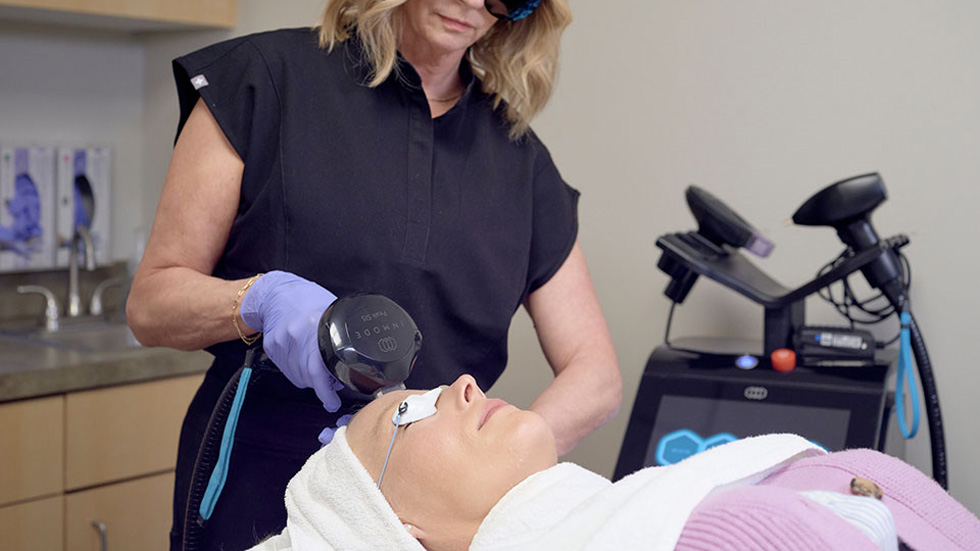
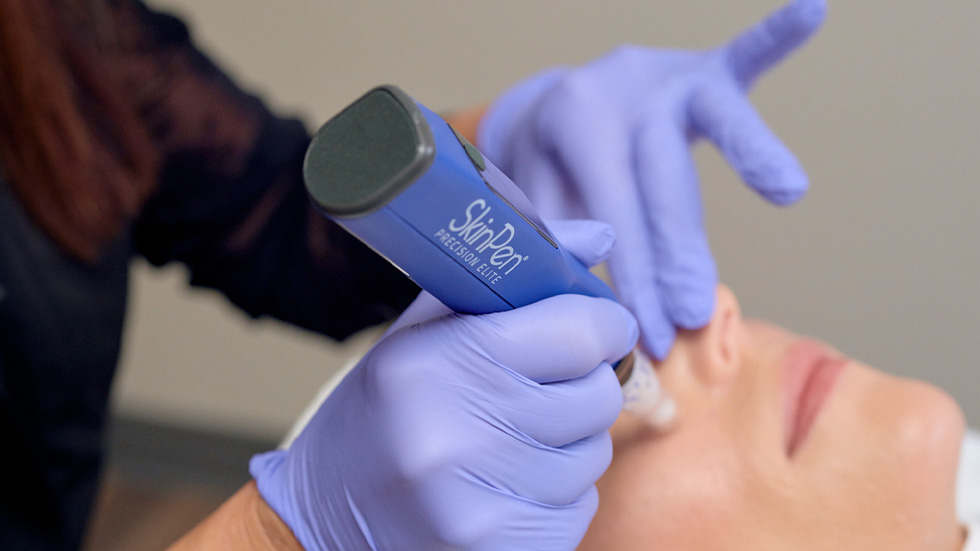
As your schedule and sun exposure begin to change, fall can also provide an opportunity to reconsider professional skincare treatments that may not have fit comfortably into your summer plans.
The important distinction is that fall itself is not a reason to have a treatment. Timing should still depend on your skin, the treatment being considered, your lifestyle, and your ability to follow the recommended aftercare.
If pigmentation has become more noticeable, the conversation may focus on treatments intended to address uneven tone. If hydration and skin quality are the primary concerns, a customized facial or another supportive treatment may make more sense. If texture is what you are noticing, your aesthetic provider can discuss options based on the condition of your skin rather than automatically recommending the most intensive approach.
This is where professional skincare treatments can complement what you are doing at home. The purpose is not to fit as many treatments as possible into the cooler months, but to choose interventions that have a clear reason behind them.
Sunscreen does not become less important when summer ends
One part of your routine should remain familiar as the seasons change: daily sun protection.
It can be tempting to associate sunscreen primarily with summer, especially once temperatures fall and you begin spending less time outdoors. UV exposure, however, continues throughout the year.
Maintaining daily sunscreen is particularly important if you are addressing pigmentation or incorporating professional treatments into your skincare plan. It also helps protect the progress you are trying to make with the rest of your routine.
The sunscreen you prefer may change with the season. A lightweight formula that feels comfortable in hot, humid weather may no longer be the one you enjoy using most as conditions become cooler and drier. What matters is finding a formulation that works well with your skin and that you are comfortable applying consistently.
Your routine should be allowed to evolve
A skincare routine does not have to remain identical throughout the year to be consistent.
Consistency is better understood as continuing to support your skin while adjusting the details when its needs change. That may mean changing the texture of your moisturizer, reconsidering how frequently you use an active ingredient, or introducing professional care when there is a specific concern you would like to address.
It does not necessarily mean adding more.
If your skin feels comfortable and your existing routine continues to work well, there may be very little that needs to change simply because fall is approaching. If you are noticing new pigmentation, dehydration, texture changes, or sensitivity, those observations can help guide the conversation about what might be useful.
This approach keeps the focus on your skin rather than on seasonal skincare trends.
Starting with what you notice in your skin
The transition from summer into fall can be a useful opportunity to look at your skin with fresh eyes. After months of different weather, sun exposure, travel, and changes in routine, what worked at the beginning of summer may not be exactly what your skin needs now.
At PIPS, that reassessment begins with understanding what you are noticing. Pigmentation, hydration, texture, redness, and sensitivity can each point toward different considerations, which is why there is no single post summer treatment or routine that makes sense for every skin type.
Working with an aesthetic provider can help you understand which parts of your current routine are still serving your skin well, where an adjustment may be useful, and whether professional treatment has a meaningful role in your plan.
As the season changes, the most useful question is not what you are supposed to add to your skincare routine. It is what you are noticing in your skin now, and how your routine can respond thoughtfully to those changes.