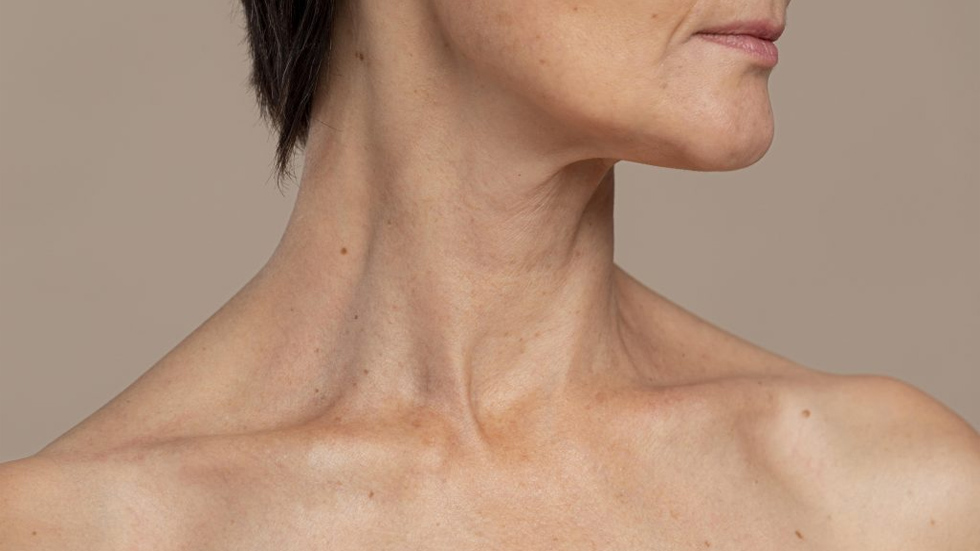

Changes in your face rarely appear all at once. You may first notice that your jawline looks less defined in photographs, that the lower face feels heavier, or that the transition between your face and neck is different than you remember.
Because these changes happen gradually, it can be difficult to identify exactly what looks different. You still recognize your features and expressions, but the overall face may no longer reflect the way you are accustomed to seeing yourself.
This is often where the conversation about facelift surgery begins.
A natural-looking facelift is not about making the skin as tight as possible or trying to recreate your face from a particular age. It begins with understanding which parts of your facial anatomy have changed and how those changes are affecting the contours you see today.
Facial aging is not only a change in the skin
When you look in the mirror, the skin is naturally the easiest part of your face to notice. If the lower face appears looser, it can seem logical to assume that loose skin is the entire problem.
The changes that develop with facial aging, however, involve more than the surface.
The tissues beneath the skin also change over time, and those changes can affect the cheeks, lower face, jawline, and neck. Facial volume and the relationships between different areas of the face can evolve as well.
This helps explain why facelift surgery is not simply a matter of pulling loose skin tighter.
Dr. Dennis Hammond and Dr. Paige Goote evaluate the face as a combination of interconnected structures. Skin quality matters, but so do the tissues underneath it, the contours of the lower face, the jawline, the neck, and the natural proportions that give your face its individual character.
What you notice may involve more than one area
You might begin thinking about facial rejuvenation because of one specific concern.
Perhaps it is the jawline. Perhaps you notice changes around the lower cheeks, or you feel that the area beneath your chin looks different than it once did.
These concerns can be closely related anatomically.
A change in the tissues of the lower face can affect the definition of the jawline. The jawline, in turn, influences how the face transitions into the neck. What appears to be one isolated concern may therefore reflect changes occurring across several connected areas.
Looking at the face as a whole does not mean that every area needs to be treated. It simply helps identify where the change you are noticing is actually coming from.
A natural result should still look familiar to you
One of the concerns you may have about facelift surgery is whether you will still look like yourself afterward.
That concern is important because facial rejuvenation should not begin with the assumption that every sign of aging needs to disappear.
Your bone structure, facial proportions, smile, expressions, and the relationships between your features are part of what makes your face recognizable. A thoughtful surgical plan works within those characteristics rather than trying to impose a standardized appearance.
This is also why your age alone says very little about what your facelift should involve.
Two people of the same age can have very different skin characteristics, facial structures, tissue changes, and areas of concern. The surgical plan needs to respond to those differences rather than to the number on a birth certificate.
Tighter is not the same as more natural
If facial aging involves increasing laxity, it may seem reasonable to think that more tightening would create a better result.
But a natural facelift is about more than simply tightening the tissues. The way tissues are repositioned and supported matters, as does the relationship between those deeper changes and the skin that lies over them. Relying on the skin alone to create the contour can produce a very different effect from addressing the anatomy contributing to the change.
This is an important distinction when you are looking at facelift results. A refreshed face does not need to look stretched, unusually smooth, or noticeably operated on.
Instead, the jawline and lower facial contours should make sense alongside the features that have not been changed.
Your expression is part of the result
Your face is constantly moving. You smile, speak, laugh, and communicate through expressions that are uniquely your own and familiar to the people around you.
Preserving that sense of familiarity matters.
During consultation, it can be helpful to explain not only what you would like to improve but also what you want to preserve. You may like the shape of your cheeks, the character of your smile, or features that remind you of your family. You may simply want greater definition through the lower face without feeling that your overall appearance has been changed.
Those preferences give Dr. Hammond and Dr. Goote useful context when evaluating what surgery may be able to address.
A facelift does not need to solve every facial concern
You may notice several changes when you look at your face, but they do not necessarily have the same anatomical cause.
Changes in skin texture or pigmentation are different from changes in tissue position. Eyelid concerns are different from lower facial laxity. Loss of facial volume is not necessarily addressed in the same way as a change in the jawline.
Understanding these differences can prevent one procedure from being expected to do too much.
During consultation, Dr. Hammond and Dr. Goote can help distinguish the changes that may respond to facelift surgery from concerns that involve other areas or structures. In some cases, that may lead to a broader discussion of facial rejuvenation. In others, it may mean keeping the surgical plan more focused.
The purpose is not to treat every visible sign of aging. It is to understand which changes matter to you and which anatomical structures are responsible for them.
There is no single “right age” for a facelift
You may wonder whether you are too young for facelift surgery, whether you should wait longer, or whether you have somehow waited too long.
Age is only one part of the equation.
Genetics, sun exposure, weight changes, skin characteristics, facial structure, and the natural aging process all influence how and when facial changes become noticeable.
Instead of asking whether you have reached the correct age for surgery, it can be more useful to look at what has changed and how you feel about those changes.
If the concerns you are noticing correspond to anatomical changes that facelift surgery is designed to address, a consultation can help you understand what your options are without assuming that surgery is necessarily the next step.
Understanding what has changed without changing who you are
When you first notice facial aging, it can be difficult to separate one concern from the overall feeling that your face looks different.
A careful evaluation helps make those changes easier to understand.
By looking at your skin, underlying tissues, facial contours, jawline, neck, and natural proportions together, Dr. Hammond and Dr. Goote can explain what is contributing to the changes you see and what facelift surgery could realistically address.
From there, the conversation becomes less about trying to look younger at any cost and more about whether restoring certain contours could help your face look refreshed while remaining familiar to you.